- news
Monday, 23rd February 2026
Looking back and looking forward
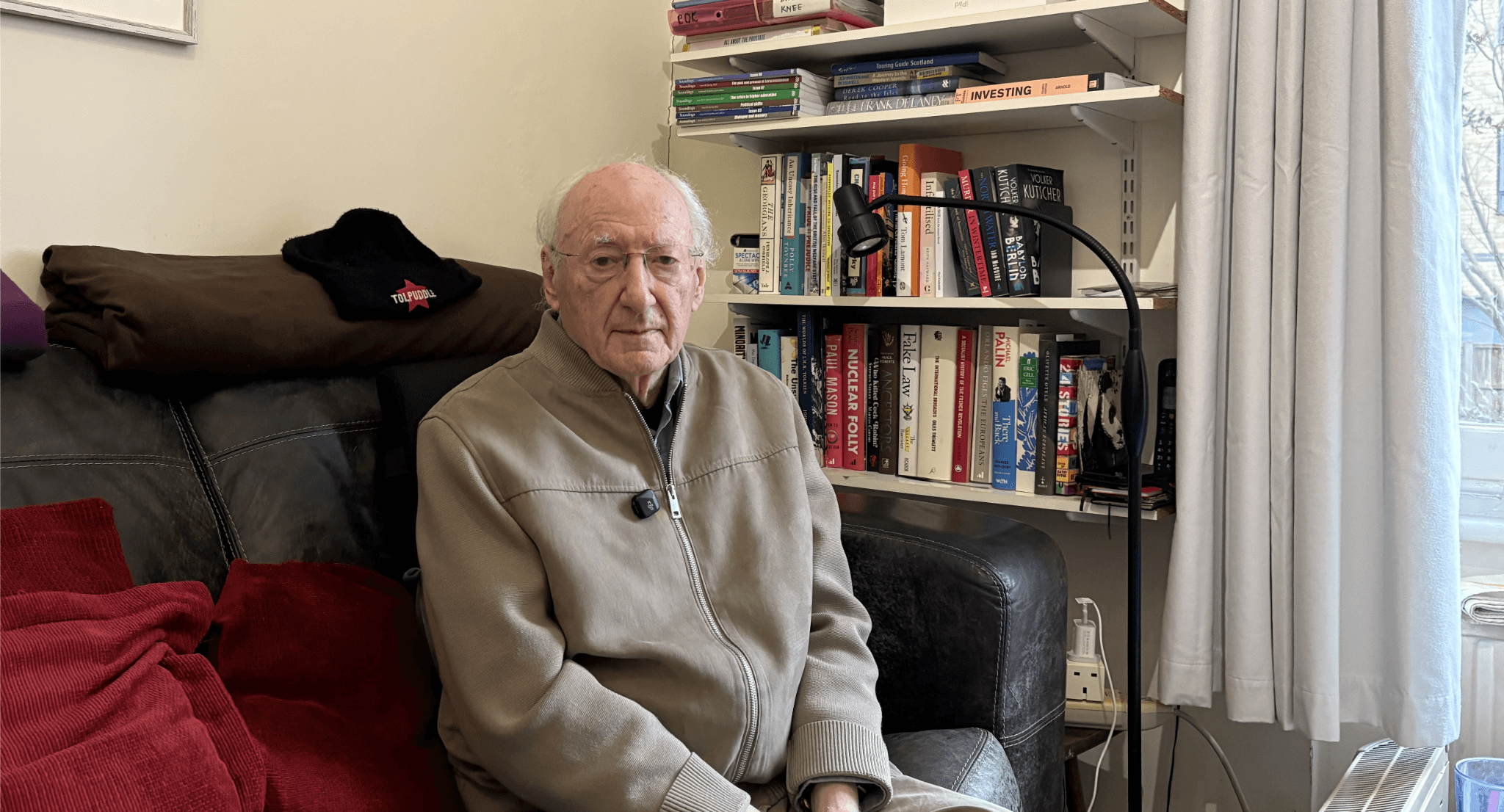
The founder of the Law Centres movement, Peter Kandler, was recently awarded Honorary KC. Peter sat down with us to reflect on the origins of the movement and the public value of Law Centres.
How did it all begin?
'After graduating from my law degree at the London School of Economics, I joined a 150-year-old probate and trust firm. My principal was an Old Etonian. Reading Dickens and Hardy as a teenager, I had been outraged by poverty and exploitation. My legal career to date didn’t match up with that interest, and I was in search of something with greater meaning.
'I gained a political education at the Partisan Coffee House in Soho, where I heard speeches from Eric Hobsbawm and Stuart Hall. Hall and the New Left were active in North Kensington, which at that time was the fourth poorest area in the country, suffering profound exploitation.
'The New Left was trying to change things in North Kensington, and one of its approaches was to set up three legal advice points in the area. It became clear that advice was not enough without also providing representation at court. And so, we set up North Kensington Law Centre to fill that gap.'
What did it mean for someone to have a Law Centre on their doorstep for the first time and how did it change the balance of power in their lives?
'Local people were now able to take landlords to court; to fight Rachmanism. Our work helped the New Left to stop Rachman and the worst behaviour of Landlords. The threat of legal action was troublesome enough that Rachman once offered the New Left three houses to lay off him.
'Other Law Centres were set up, and all this fresh legal action shaped the system. A local court had two part-time judges when Law Centres first started out. After about five years, this became five full-time judges. Ultimately, the presence of Law Centres helped change the culture. If landlords didn’t follow the law, they risked paying out large sums in damages. So, landlords were advised by their solicitors to behave differently.
'The same happened with racist policing. A great injustice of the day was the ‘sus’ laws. Black people in North Kensington, as elsewhere, were framed for crimes they didn’t commit. It was commonplace for the police to beat people up in jail.
'We responded by setting up 24-hour police station duty desks. To my knowledge, I was the first solicitor in the country to regularly attend a police station through such a voluntary service. People arrested were now under the continual watch of a solicitor. We stopped a lot of false confessions and got people bail, and like with housing, we eventually changed the culture. It wasn’t until the Police and Criminal Evidence Act of 1984 that solicitors were paid through public funds to attend police stations.'
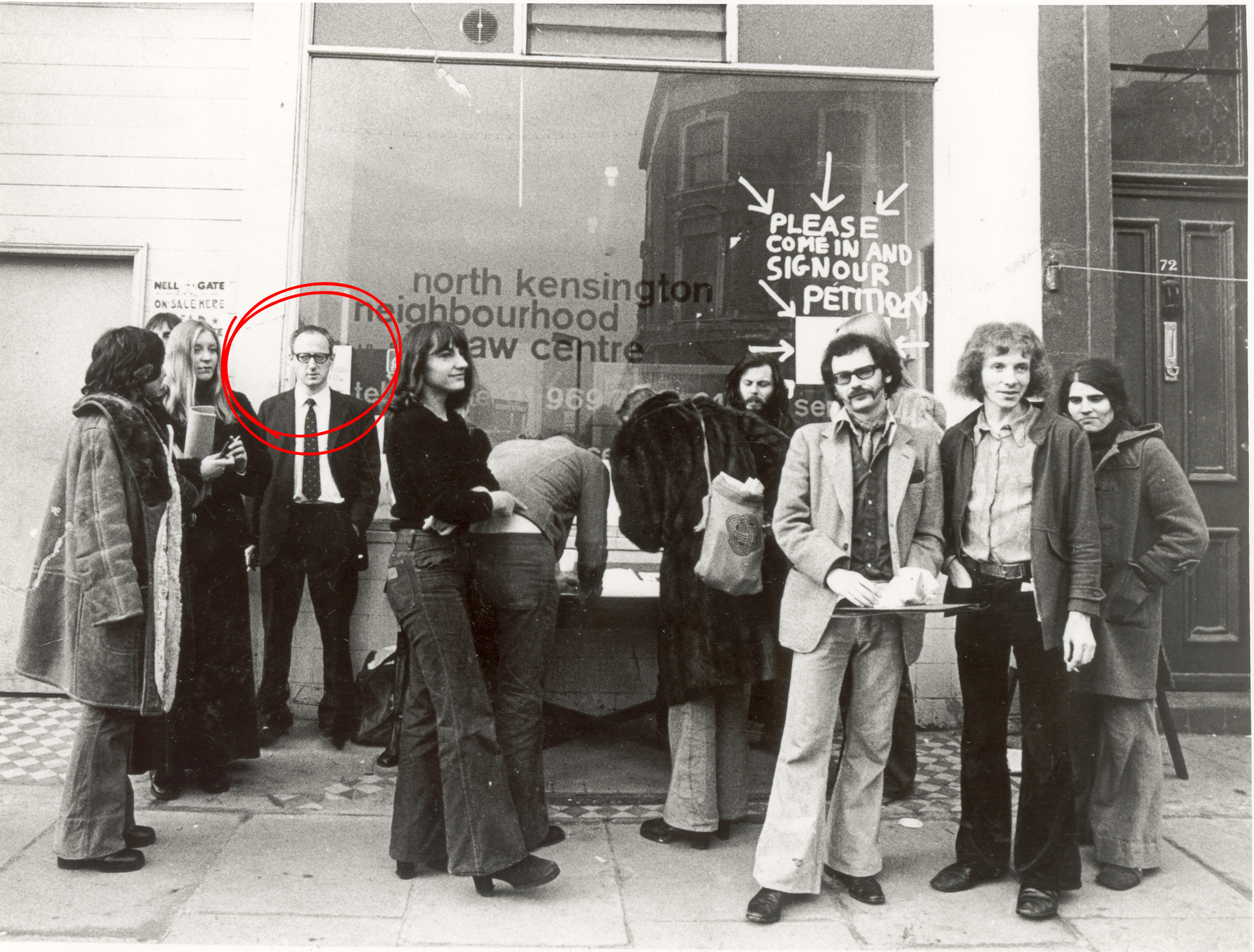
Peter Kandler and colleagues, circa 1970s
Law Centres are charities embedded in their communities. Why is 'localness' so vital?
'When we started out, older people didn’t come into the Law Centre initially. Many people were scared of lawyers, thinking they were very posh and only dressed in suits. Lawyers didn’t treat their clients as equals.
'We tried to change that perception. I for one only wore a suit when I went to court. Clients began to feel comfortable calling me ‘Pete’, instead of Peter, which I couldn’t have envisaged as a young solicitor.
'We saw the fear of lawyers fall away, and it encouraged people to engage with the law in ways which they hadn't before. Another impact of localness was that elderly people didn’t have to travel far to get advice. This too, increased engagement.'
What would you say to a young person starting out in the law?
'Go and get advice work. It’s vital that people do jobs they enjoy, and work for people they believe in. Law Centres are the place for that.
'I’ve thoroughly enjoyed this work. The enjoyment comes from helping people and feeling that you’ve personally done good.'
What would you like to see for the future of the Law Centres movement?
'I would like to see a Law Centre in every deprived community across the UK. Lawyers are key to solving social problems. Just as we responded to the problems of the day in North Kensington, Law Centres today are responding to the problems of their own communities and making change happen. Every community needs this work.'
For media enquiries, please contact media@lawcentres.org.uk
Latest News
Wednesday, 14th October 2026
Hillingdon Law Centre closes after five decades serving west LondonTuesday, 7th July 2026
High Court judgment reinforces councils' duty to support homeless disabled peopleWednesday, 6th May 2026
Hillingdon Law Centre temporary closure: our statement
Stay in the loop
Sign up for our monthly newsletter to stay in the loop